
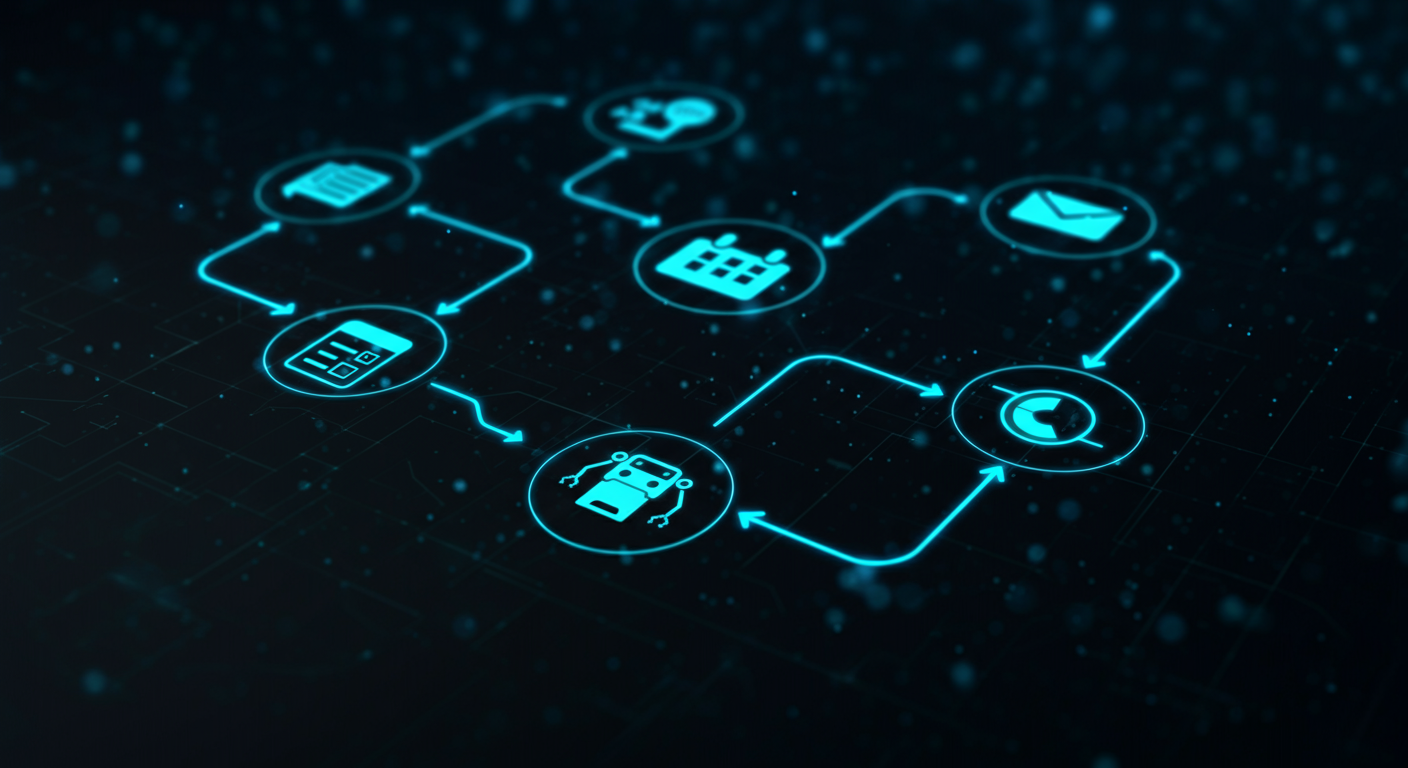
AI automations are replacing manual lead nurturing by responding to leads within seconds instead of hours, personalizing follow-up sequences at scale, routing high-intent signals to sales reps in real time, and eliminating the data-entry work that consumes 30 to 40 percent of a human SDR’s day. This is not a future state — businesses are running these automations right now and measuring the results in booked meetings and closed revenue.
Here are the five most impactful ways AI automations are replacing manual lead nurturing, with specific implementation guidance for each.
1. Instant Outreach: AI Responds to New Leads in Under 60 Seconds
Manual lead nurturing starts with a human noticing a new lead in the CRM, deciding when to reach out, and making the call or sending the email. This process takes a minimum of 15 minutes and often takes hours. Research on lead response time consistently shows that waiting more than 5 minutes dramatically reduces the probability of ever qualifying that lead.
AI automation eliminates this delay entirely. When a lead submits a form, the automation triggers immediately — a voice agent calls within 60 seconds, or an SMS sequence fires within 30 seconds, depending on your configuration. The prospect is still in the mindset of the action they just took. The conversation is relevant. The conversion rate is dramatically higher.
Implementation: Connect your CRM (HubSpot, Salesforce, GoHighLevel) to a workflow automation tool (n8n, Zapier) that triggers an AI voice call via Vapi or Bland AI the moment a lead record is created or updated to a qualified status.
2. Personalized Follow-Up Sequences at Scale
Human SDRs can personalize outreach, but they can only do it for the leads they have time to research. With a typical SDR managing 80 to 150 active leads, personalization at scale is impossible. Most leads receive generic, templated follow-up that feels impersonal and produces low response rates.
AI automations combine CRM data, behavioral signals, and LLM-generated copy to create follow-up messages that feel genuinely relevant to each prospect. An email that references the specific page a lead visited, the webinar they attended, or the exact product they viewed converts at 3 to 5 times the rate of a generic follow-up.
Implementation: Use a workflow automation that reads CRM properties and recent activity, passes them to an LLM API call, and generates personalized subject lines and opening paragraphs for each follow-up email in your sequence.
3. Behavioral Trigger Responses: Reaching Out at the Right Moment
One of the most powerful aspects of AI lead nurturing automation is the ability to act on behavioral signals in real time. When a lead visits your pricing page, watches a product demo video, or opens the same email three times, those are high-intent signals that a human rep would never see — unless they happen to check the CRM at exactly the right moment.
AI automations monitor these signals continuously and trigger immediate, contextual outreach. A lead who visits your pricing page at 9 PM gets an SMS within 2 minutes that says “Saw you were checking out our pricing — do you have 15 minutes tomorrow to see if we are a fit?” No human was monitoring the page. No one noticed. The automation caught the signal and acted.
Implementation: Use HubSpot’s behavioral tracking or Segment to log page visits and events, then build workflow triggers that fire AI outreach when high-intent actions are detected.
4. Automated Re-Engagement of Cold or Stalled Leads
Every business has a graveyard of leads that went cold — prospects who were interested 3 months ago, asked good questions, and then disappeared. Manual re-engagement of these leads is time-consuming, and most teams never get to it. The leads sit in the CRM losing value every day.
AI automations run re-engagement sequences automatically on a defined schedule. A lead that has been inactive for 60 days gets an AI-generated email referencing their original inquiry. If they click the email, a voice agent calls within 5 minutes. If they do not respond after 3 attempts, they are flagged for quarterly re-engagement. Every interaction is logged and measured.
Implementation: Build a CRM workflow that segments leads by last-activity date and triggers AI re-engagement sequences on a rolling schedule, with outcome-based branching for responders vs. non-responders.
5. Automatic CRM Data Enrichment and Qualification Scoring
Manual lead nurturing requires a human to research each lead, update the CRM record, score the lead based on subjective criteria, and decide what action to take. This data work consumes a significant percentage of every SDR’s available time — time they could spend on conversations.
AI automations handle this entire data layer: enriching lead records with company data from sources like Clearbit or Apollo, scoring leads against your defined qualification criteria, routing hot leads immediately to human reps, and updating the CRM with every interaction outcome. The human rep opens a lead record and sees everything they need — company size, intent signals, call transcript, qualification score — without doing any of the research themselves.
Implementation: Connect your CRM to an enrichment tool via API, build a scoring model based on your qualification criteria, and use automation to route leads above your threshold score to a “ready for human” pipeline stage.
Frequently Asked Questions: AI Automations and Lead Nurturing
What are AI automations for lead nurturing?
AI automations for lead nurturing are software workflows that use artificial intelligence to engage, qualify, and follow up with leads automatically — without manual intervention from your sales team.
Do AI automations replace human salespeople?
AI automations replace the repetitive, time-sensitive portions of lead nurturing — first response, data entry, scheduling, follow-up sequences. They do not replace the high-value human work of discovery conversations, strategic selling, and relationship management.
What tools do I need to automate lead nurturing with AI?
A typical AI lead nurturing stack includes a CRM (HubSpot, Salesforce), a workflow automation tool (n8n, Zapier), a voice AI platform (Vapi, Bland AI) for phone outreach, and an email delivery service (Gmail, SendGrid) for written follow-up.
How long does it take to set up AI lead nurturing automation?
A basic AI lead nurturing automation — covering first response, a 3-step follow-up sequence, and CRM logging — can be live in 1 to 2 weeks. A full system with behavioral triggers, re-engagement flows, and calendar booking typically takes 2 to 3 weeks.
What is the ROI of AI lead nurturing automation?
The most common measurable outcomes are a 2 to 4x improvement in lead-to-meeting conversion rate, a significant reduction in SDR labor cost, and dramatically better CRM data quality for pipeline forecasting.
Ready to stop nurturing leads manually? See how UNHOOKED builds AI automation systems that book meetings while you sleep.