
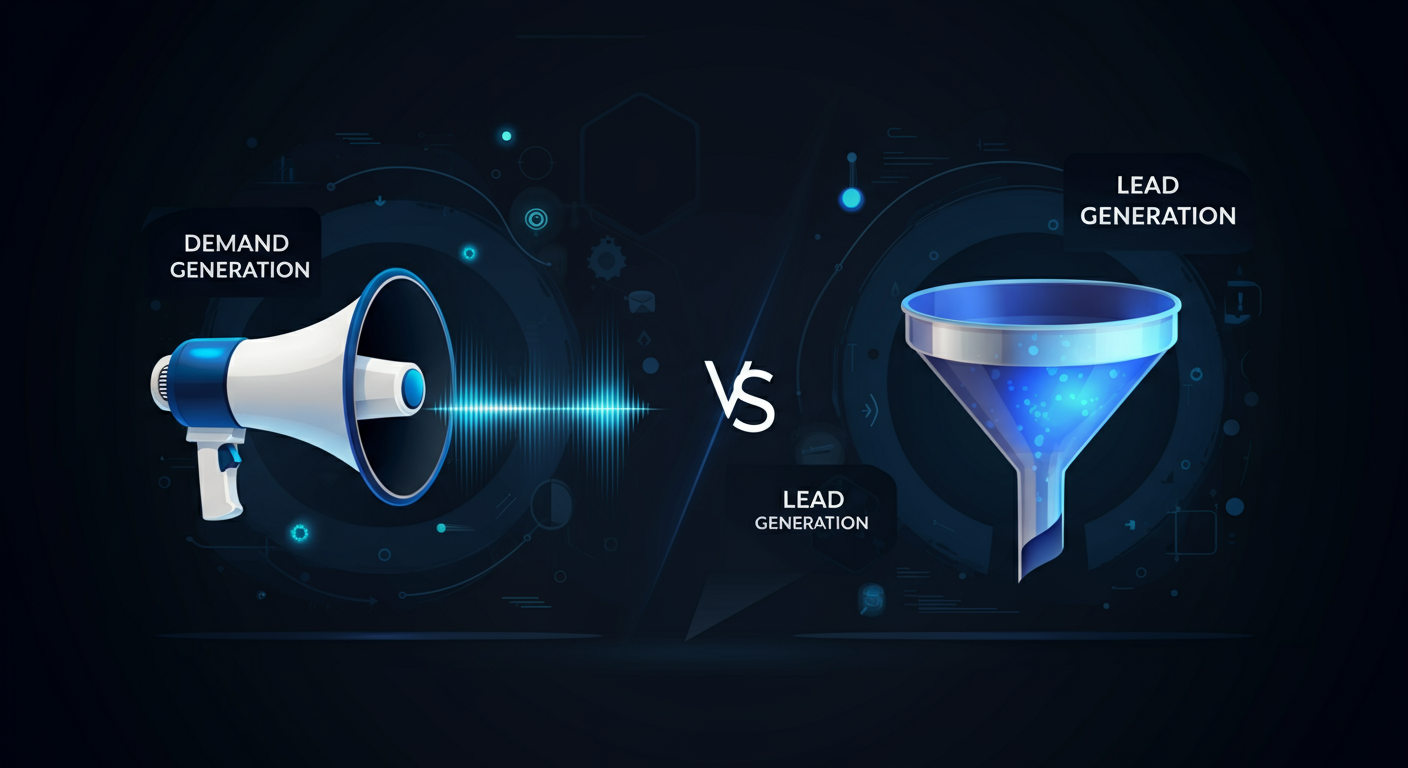
Demand generation and lead generation are not interchangeable terms, and confusing them produces marketing strategies that fail on both dimensions. Demand generation builds the market — it creates awareness and desire in people who were not looking for your solution. Lead generation captures that demand — it converts aware, interested prospects into actionable sales opportunities. Most businesses need both, sequenced correctly.
What Is Demand Generation?
Demand generation is the set of activities that make people aware that a problem exists, that a category of solutions exists to address it, and that your company is a credible player in that category. You are not asking anyone to do anything yet — you are building mental availability for the moment when they are ready to buy.
Demand generation channels:
- Content marketing (blog posts, YouTube, podcasts) that educates the market
- Social media presence (LinkedIn, Instagram) that builds brand familiarity over time
- PR and media coverage that establishes credibility through third-party validation
- Meta awareness campaigns targeting cold audiences who do not know you
- YouTube pre-roll ads that interrupt and introduce
- Podcasts, speaking engagements, webinars that build authority
Demand generation is the long game. It does not convert to leads today — it builds the audience that will convert to leads in 30, 90, or 180 days. This is why it is often underfunded: the ROI is not visible immediately, but the compound effect is enormous.
What Is Lead Generation?
Lead generation captures demand that already exists — from people who know they have a problem and are actively looking for a solution. Lead generation converts interested prospects into names, emails, or phone numbers that your sales team can work.
Lead generation channels:
- Google Search Ads targeting high-intent keywords
- SEO content optimized for “buyer intent” queries (“hire [service]”, “best [service] agency”)
- Meta retargeting ads targeting website visitors and video viewers
- Referral programs that leverage existing satisfied clients
- Gated content (whitepapers, assessments) that exchange value for contact information
- Webinar registrations and events
Lead generation has a measurable, near-term ROI. You can see CPL and track leads to closed revenue with reasonable precision. This is why it gets funded while demand gen is cut — the feedback loop is faster and more visible.
Why You Need Both (and the Right Sequence)
A lead generation-only strategy hits a ceiling. You can only capture demand that already exists. In most B2B service categories, the actively searching market is 3–5% of your total addressable market at any given time. The other 95–97% is not searching — they either do not know the solution exists, are not ready yet, or have decided to solve the problem differently.
Demand generation expands the pool of people who become leads next month. Lead generation converts the people who are ready today. Running both simultaneously means you are working the short-term and long-term pipeline simultaneously.
The right sequence for most service businesses:
- Months 1–3: Lead generation only (Google Search, retargeting) — get revenue flowing first
- Months 4–6: Add demand generation (content, social, Meta prospecting) — start building the audience
- Month 7+: Both engines running, demand generation feeding lead generation pipeline at growing volume
Metrics: How Each Is Measured
Demand generation metrics (the long game):
- Brand search volume over time (are more people searching your name?)
- Direct traffic growth (people typing your URL directly)
- Social follower growth and engagement rate
- Assisted conversions (demand gen content that assisted eventual lead gen conversions)
Lead generation metrics (the short game):
- CPL by channel and campaign
- Lead volume per week/month
- Lead quality (ICP fit rate, booked call rate, close rate)
- CAC and return on ad spend
Frequently Asked Questions
Should an early-stage business focus on demand gen or lead gen?
Lead generation first. Demand generation requires time and scale to compound. Early-stage businesses need revenue now. Once you have a proven lead gen system generating consistent revenue, layer in demand gen to expand the addressable market.
How do I measure the ROI of demand generation?
The most reliable method: track brand search volume (Google Search Console), direct traffic, and organic lead volume over 6–12 months. Rising trend lines in these metrics indicate demand generation is working. Multi-touch attribution in GA4 also shows which demand gen content assisted lead gen conversions.
Is SEO demand generation or lead generation?
Both. Informational SEO content (how-to articles, explainers) is demand generation — it builds awareness and educates the market. Transactional/commercial SEO content (service pages, comparison pages, “best of” articles) is lead generation — it captures people who are ready to buy.
What is the difference between inbound and demand generation?
Inbound marketing is the broader methodology of attracting customers through valuable content. Demand generation is a specific subset that focuses on awareness and category creation. All demand gen is inbound, but not all inbound is demand gen — gated content behind a form is inbound but functions as lead gen.
Can Meta Ads do both demand generation and lead generation?
Yes. Cold audience awareness campaigns are demand generation. Retargeting campaigns are lead generation. Run both from the same Meta account, with separate campaign objectives, creative, and measurement frameworks.
UNHOOKED builds demand generation and lead generation systems as an integrated marketing engine. See how both layers work together.