
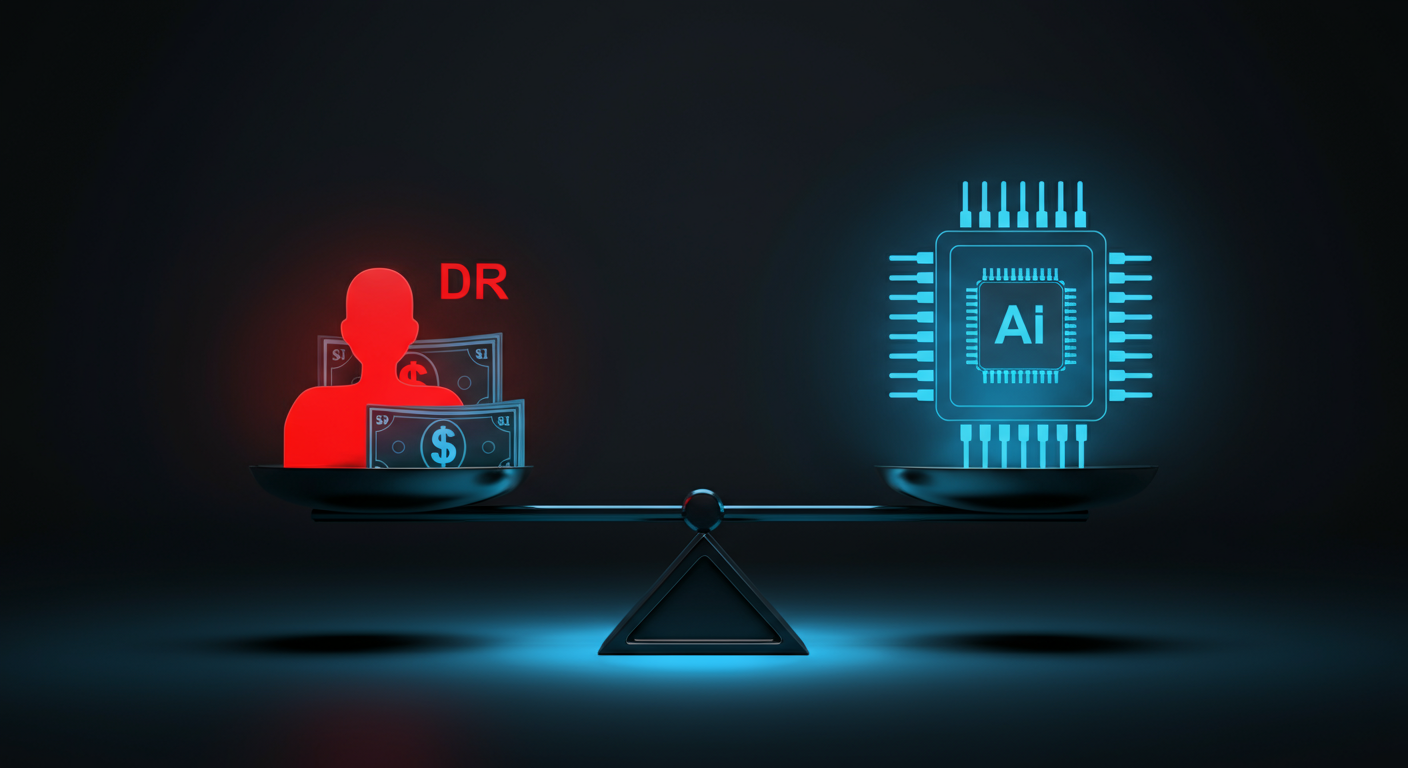
The true cost of a full-time SDR in 2025 — including salary, benefits, management overhead, tools, and the cost of their inevitable slow response times — typically runs $90,000 to $140,000 per year. A fully deployed AI sales agent handling the same first-touch qualification work costs $36,000 to $96,000 per year. But the cost difference is only part of the story. The performance difference is where the case for AI becomes undeniable.
This guide breaks down every cost component honestly so you can make an informed decision for your business.
The Full Loaded Cost of an SDR in 2025
Most businesses underestimate what a human SDR actually costs when they account for everything:
| Cost Component | Annual Amount |
|---|---|
| Base salary (US average) | $55,000 – $70,000 |
| Payroll taxes and benefits (30-40%) | $16,500 – $28,000 |
| Sales tools (CRM, dialer, enrichment) | $3,000 – $8,000 |
| Management time (10-15% of manager salary) | $8,000 – $15,000 |
| Recruiting and onboarding (average SDR tenure: 18 months) | $5,000 – $10,000/year amortized |
| Training and ramp time (3-6 months at partial productivity) | $10,000 – $20,000 |
| Total loaded annual cost | $97,500 – $151,000 |
And this assumes your SDR is performing at a consistent, high level — which most do not, especially in the critical first 6 months and as they approach burnout.
The Full Cost of an AI Sales Agent in 2025
| Cost Component | Annual Amount |
|---|---|
| Voice AI platform (Vapi, Bland, Retell) — per minute pricing | $3,600 – $12,000 |
| Workflow automation (n8n cloud or similar) | $600 – $2,400 |
| CRM (if not already in place) | $0 – $6,000 |
| Agency setup and ongoing management (UNHOOKED tier) | $39,600 – $64,800 |
| Phone numbers and telephony | $600 – $1,200 |
| Total annual cost | $44,400 – $86,400 |
The agency management cost covers continuous script optimization, CRM tuning, call transcript review, and performance reporting — work that ensures the AI stays effective as your lead mix and offer evolve.
The Performance Comparison: Where the Real Difference Lives
Cost is not the most important dimension. Performance is. Here is how a human SDR and an AI sales agent compare on the metrics that actually drive revenue:
| Metric | Human SDR | AI Sales Agent |
|---|---|---|
| Average first-response time | 30 min – 4 hours | Under 60 seconds |
| Lead-to-meeting conversion rate | 8 – 15% | 15 – 28% (with fast response) |
| Working hours | 45 hrs/week | 168 hrs/week (24/7) |
| Concurrent calls | 1 | Unlimited |
| Script consistency | Variable (mood, energy, experience level) | 100% consistent |
| CRM data quality | Inconsistent (manual entry) | 100% automated, structured |
| Ramp time to full productivity | 3 – 6 months | 2 – 3 weeks |
When a Human SDR Is Still the Right Choice
This is not a blanket argument for eliminating human SDRs. There are situations where humans outperform AI in sales:
- Enterprise deals over $500K ACV: The relationship-building and strategic navigation required for large enterprise sales still needs a skilled human SDR
- Highly technical or regulated products: If qualification requires deep product knowledge or legal nuance, AI cannot reliably handle it
- Warm referrals from high-value relationships: A referral from a board member or key partner deserves a personal human touch, not an AI call
For everyone else — service businesses, SaaS companies, agencies, professional services, e-commerce — the first-touch qualification layer is an excellent AI use case.
The Hybrid Model: What Most High-Growth Teams Are Moving Toward
The highest-performing sales organizations in 2025 are not choosing between humans and AI. They are using both strategically:
- AI handles: All first-touch outreach within 60 seconds, initial qualification, meeting booking, CRM data entry, follow-up sequences
- Humans handle: Discovery calls with pre-qualified prospects, proposal and negotiation, relationship management, high-value account expansion
In this model, a single skilled account executive can handle the workload that previously required 3 to 5 SDRs, because they are only spending time on conversations that actually move deals forward.
Frequently Asked Questions: SDR vs. AI Sales Agent
Is an AI sales agent better than an SDR?
For first-touch lead qualification and meeting booking, AI sales agents consistently outperform human SDRs on speed, consistency, and cost. For complex enterprise sales and relationship management, human SDRs still have a clear advantage.
Can an AI sales agent replace my entire SDR team?
In most cases, an AI sales agent can replace the first-touch qualification function of your SDR team. The humans on that team can then be redeployed to higher-value work — discovery calls, proposal management, or account expansion.
How long does it take to see ROI from an AI sales agent?
Most businesses see measurable improvement in lead-to-meeting conversion rates within the first 30 days. Full ROI relative to the cost of replacing a human SDR is typically achieved within 60 to 90 days.
What is the risk of using an AI sales agent?
The primary risks are poor script design (which leads to unqualified meetings), technical integration failures (which lose lead data), and prospect perception (some industries have lower tolerance for AI outreach). All three are manageable with proper setup and monitoring.
How do I know if my business is ready for an AI sales agent?
If you have a defined qualification process, receive 20 or more inbound leads per month, and your current first-response time exceeds 5 minutes, you are almost certainly ready — and likely losing revenue every week you wait.
Want to see the math for your specific lead volume and conversion rate? Book a free call with UNHOOKED — we will show you the exact ROI model before you commit to anything.