
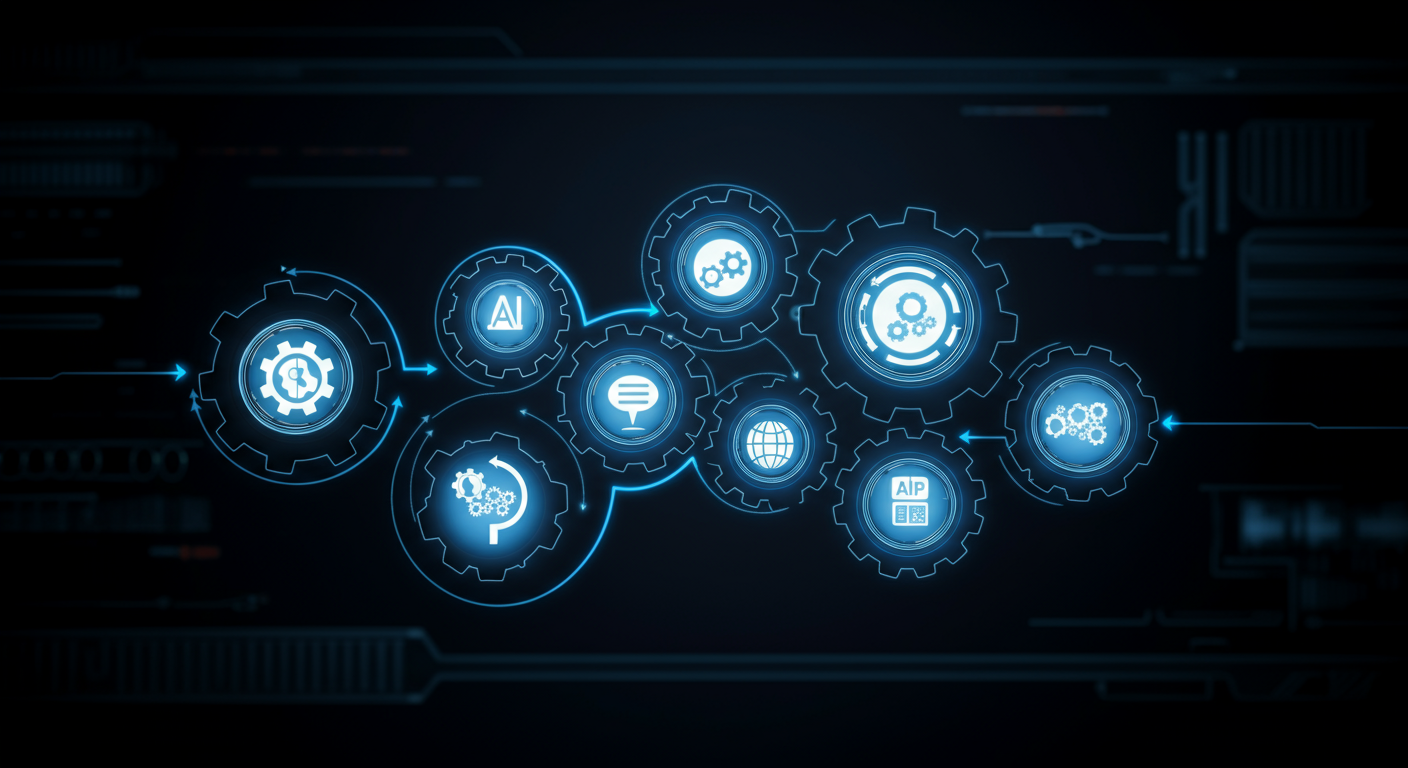
A sales engine is a connected system where each component — traffic, landing page, lead capture, AI response, qualification, booking, and follow-up — hands off automatically to the next, converting strangers into paying customers without requiring manual intervention at every step. Most businesses run “ads” and wonder why leads do not convert. The answer is almost always that they have the first piece of a sales engine without the rest — driving traffic into a system that was not built to convert it.
Why Ads Alone Are Not a Sales Engine
A Google Search Ad or Meta campaign generates a click. That click goes somewhere — ideally a landing page built to convert that specific intent. The visitor becomes a lead (form submission, phone call, chat message). That lead goes somewhere — ideally a CRM with an instant follow-up trigger. A human or AI makes contact. A qualifying conversation happens. A meeting gets booked. The sales process begins.
The ad is step one. A sales engine has seven steps. Most businesses running ads have spent carefully on step one and left steps two through seven to chance. This is why the average service business converts 1–3% of ad traffic into customers — and why businesses with complete sales engines convert 8–15%.
The 7 Components of a Sales Engine
- 1. Traffic source: Controlled, measurable traffic — Google Ads, Meta Ads, or organic SEO. The engine needs fuel. Without consistent traffic, the rest cannot run.
- 2. Landing page: A conversion-optimized page matched to the traffic source. Not a homepage. A focused page with one goal: convert this visitor into this lead type.
- 3. Lead capture: The mechanism that transforms a visitor into a contactable lead — form, phone number, chat widget, or booking widget. Friction-optimized: minimum fields, maximum clarity.
- 4. Instant AI response: Within 60 seconds of form submission, an AI voice agent calls the lead, begins the qualification conversation, and either books directly or routes to a human.
- 5. CRM: Every lead, every call outcome, every conversation goes into one system that tracks the lead from first contact to closed deal. No data silos.
- 6. Follow-up sequence: Automated email and SMS sequence that nurtures leads who did not book immediately. Not just “checking in” — educational content that moves them toward the decision.
- 7. Sales process: The human layer — discovery calls, proposals, follow-up — executed by your team on fully qualified, warm leads, not cold calls to unqualified prospects.
What Makes It an “Engine” vs. a Collection of Tools
The difference between a sales engine and a collection of marketing tools is integration and automation. In an engine:
- A form submission automatically triggers the AI agent call (not a manual “someone will call” process)
- The AI agent automatically updates the CRM with qualification data and call outcome
- A booked call automatically triggers a calendar invite, confirmation email, and reminder sequence
- An unqualified lead automatically enters the nurture sequence — not the salesperson’s to-do list
- Revenue from closed deals flows back to inform ad optimization (offline conversions)
Without these automations, every step requires human action. Human action introduces delay, inconsistency, and capacity limits. An engine runs at any volume, at any hour, without degradation in response quality.
The 3-Week UNHOOKED Build
UNHOOKED builds the full 7-component sales engine in approximately 3 weeks:
- Week 1: Ad campaigns, landing page, conversion tracking
- Week 2: CRM setup, AI agent deployment, automation workflows
- Week 3: Follow-up sequences, testing end-to-end, go-live
Frequently Asked Questions
What is the difference between a sales engine and a sales funnel?
A sales funnel is a conceptual model (awareness → interest → decision → action). A sales engine is the operational implementation — the specific tools, automations, and processes that execute each funnel stage. Funnels describe the journey; engines execute it.
How much does building a sales engine cost?
Tool costs for a basic sales engine: CRM ($0–$300/month), automation ($20–$100/month), AI agent ($100–$500/month), landing page builder ($30–$100/month). Build and configuration costs vary by complexity. UNHOOKED builds the full engine as part of a managed engagement.
Can a small business afford a sales engine?
The right question is whether a small business can afford NOT to have one. A business generating 10 qualified calls/month from manual processes pays an enormous opportunity cost every month it operates without an engine. The tool costs are typically under $500/month and the ROI multiple is significant.
How long before a sales engine generates positive ROI?
For businesses with an existing proven offer and adequate ad budget, positive ROI within 30–60 days is typical. The engine eliminates the response time problem (the biggest lead loss point for most businesses) immediately on launch.
Do I need technical skills to operate a sales engine?
Once built and configured, no. The engine runs automatically. You review the dashboard, take discovery calls, and close deals. The complexity lives in the configuration layer, which UNHOOKED handles.
UNHOOKED builds complete sales engines for service businesses. See what a full build includes.